English
  Español
  العربية
  русский
  ไทย
ไทย 
×
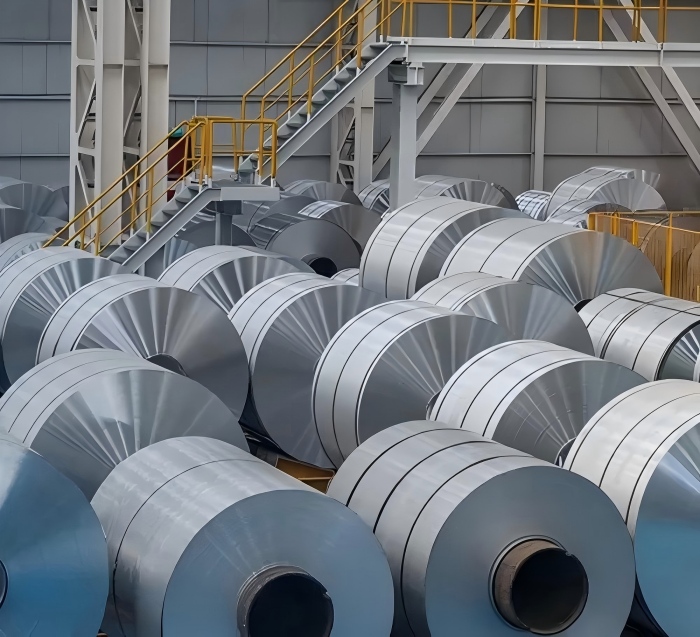
Steel coil quality is not always obvious when a roll arrives at the factory. A coil can have the correct width, thickness, color, and paperwork and still create problems once it enters production. Some issues only become visible after the steel is roll-formed. Others appear during lamination, cutting, stacking, installation, or months after the finished panels have been exposed outdoors.
For panel manufacturers, this makes incoming material control more important than a simple visual check. What looks like a small variation at coil level can become repeated across thousands of square meters of roofing or wall panels.
Roll forming tends to expose inconsistencies that remain hidden while the material is still wound into a coil.
One common example is springback. If mechanical properties vary from the material expected by the roll-forming line, the steel may not hold the profile exactly as designed after it leaves the final forming station. This can change rib angles, cover width, or lap geometry.
Flatness problems can also become more noticeable. A slight wave across the original strip may turn into visible distortion on a wide roofing sheet or panel facing. Coil camber can gradually move the strip away from the intended line, making profile dimensions less consistent over a long production run.
This is why steel coils should be evaluated in terms of how consistently they process, not simply whether the first few meters look acceptable.
When one batch runs smoothly and the next requires repeated machine adjustment, the problem is not necessarily the roll former. The incoming material deserves investigation as well.
Yes. Nominal thickness tells only part of the story.
Two coils may both be specified as 0.5 mm, but their yield strength, elongation, coating system, flatness, and actual dimensional tolerances can differ. Those differences affect the way the material responds when it is bent repeatedly into a roofing or cladding profile.
For example, a harder steel may show more springback. A material with different elongation characteristics may behave differently around tighter profile transitions. Even small changes in actual thickness can influence forming behavior when the tooling was originally set around a particular material range.
These variations matter when the coil becomes profiled sheet cladding. A dimensional change that seems minor at the raw-material stage can later affect side-lap fit, fastener alignment, or the visual straightness of a façade.
The important issue is consistency. A production line performs best when successive batches behave predictably rather than forcing operators to compensate for the material every time a new coil is loaded.
Paint cracking is one of those problems that may not exist until the coil is processed.
Prepainted steel is designed to be formed after coating, but the substrate and coating system still need sufficient flexibility for the intended profile. The National Coil Coating Association notes that forming performance depends on both the metal substrate and the coating system, with flexibility commonly evaluated through bend testing. Tool condition, clearance, and equipment alignment can also affect surface damage during forming.
The shape being produced matters as well. A gentle roofing profile places different strain on the coating than a tight fold or sharp transition.
This is why a coil that works successfully for one product is not automatically ideal for every other profile produced in the same factory.
When hairline cracking appears around a rib or bend, it is easy to blame the roll-forming machine immediately. Sometimes that is justified. In other cases, the forming process has simply revealed that the coating and substrate combination is poorly matched to the geometry being produced.
The crack may be very small at first, but once the coating is damaged, the underlying protective system is no longer working exactly as intended.
A small scratch on a flat coil may look insignificant during receiving inspection. After profiling, however, it can become more visible because the finished product reflects light differently across ribs and flats.
Surface damage also matters because building panels are not hidden components. On an industrial roof the appearance may be less critical, but on a large façade, repeated scratches, roll marks, or color differences can be obvious from a considerable distance.
This is particularly relevant for corrugated cladding panels, where one coil can produce a large continuous area of visible building envelope.
Damage can occur at several stages. A coil may already contain a defect when delivered, but poor handling, contaminated rolls, incorrect tooling clearance, or metal-to-metal contact during stacking can create similar symptoms.
Instead of treating every surface defect as a supplier issue or every scratch as a production issue, manufacturers need enough traceability to identify where the defect first appeared.
It may not change what the panel looks like on the day it is installed, which is precisely why this specification is sometimes undervalued.
Metallic coatings protect the steel substrate against corrosion. If the coating mass is poorly matched to the exposure environment and intended service life, the consequences often emerge much later rather than during manufacturing.
Guidance published through GalvInfo and the International Zinc Association specifically notes that an inadequate zinc coating mass for the intended environment can contribute to early failure, and that coating selection should consider corrosion severity and expected service life.
This is an important purchasing distinction. Two visually similar coils can represent very different long-term specifications.
For a manufacturer supplying exterior building panels, saving a small amount on the raw coil can make little economic sense if the resulting product is less suited to a humid, coastal, industrial, or otherwise corrosive environment.
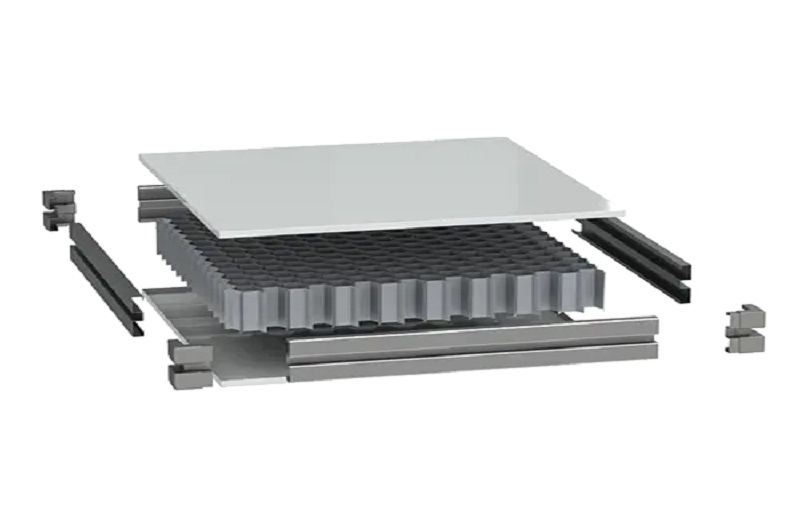
Sandwich-panel production adds another layer of sensitivity because the steel facing becomes part of a composite product.
In sandwich panel manufacturing, the facing must move continuously through profiling, bonding or foaming, pressing, cutting, and stacking. A raw-material issue can therefore influence several later processes.
Flatness is a good example. On a single-skin roofing sheet, a small amount of waviness may primarily affect appearance. On a sandwich panel, it may also make it harder to achieve a clean, uniform face across a broad panel width.
Surface condition matters for another reason. The inner face must interact reliably with the panel's bonding system. Contamination that is irrelevant to the exposed appearance can become much more important when adhesion to the insulation core is involved.
Dimensional stability also affects the joint. If panel facings are not formed consistently, the finished male and female edges may not engage as smoothly as expected.
That is when a coil issue stops being a raw-material issue and becomes a panel-installation issue.
Factory inspection happens under controlled conditions. Buildings do not operate under controlled conditions.
Finished panels are transported, lifted, fastened, heated by sunlight, cooled at night, exposed to moisture, and subjected to wind. Long wall elevations also make small dimensional or color differences much easier to see.
This is why some coil-related problems only become obvious after installation.
A subtle color difference between production batches may be difficult to notice when panels are stacked horizontally. Once they are placed next to one another on a façade, daylight can make the difference obvious.
Minor profile variation can behave in the same way. Individual sheets may pass dimensional inspection, yet cumulative variation across a long roof can make the final sheets increasingly difficult to align.
With insulated metal panels, dimensional inconsistency can also affect how evenly the joints engage. That can create unnecessary site adjustment even when the insulation core and bonding process themselves are satisfactory.
Incoming inspection should focus on the characteristics that influence the actual products being manufactured.
| Check | Why It Matters Downstream |
|---|---|
| Actual thickness | Influences forming and finished-product consistency |
| Width and edge condition | Affects line tracking and profile dimensions |
| Flatness and camber | Can appear later as waviness or alignment problems |
| Mechanical properties | Influence springback and forming behavior |
| Metallic coating specification | Affects long-term corrosion protection |
| Paint adhesion and flexibility | Matter during profiling and bending |
| Surface condition | Influences appearance and, in some applications, bonding |
| Batch identification | Makes later defect tracing possible |
This does not mean every coil needs an extensive laboratory investigation before production. The inspection level should match the application, order size, and consequences of failure.
What matters is having enough information to detect abnormal material before an entire production batch has already been converted into finished panels.
A mill certificate is important, but it cannot replace production feedback.
The document can confirm declared properties for a material batch. It cannot show whether a coil was damaged during transportation, whether moisture entered the packaging, whether the surface has been scratched during handling, or how the material behaves on a particular roll-forming line.
For repeat production, manufacturers should connect incoming documentation with what actually happens on the line.
If operators suddenly need to change machine settings, if coating behavior changes, or if the same dimensional problem begins appearing across one batch, that information should be recorded against the coil identification.
Over time, this creates a much more useful quality history than paperwork alone.
The earlier a material problem is found, the easier it is to contain.
A questionable coil identified during receiving can be isolated. A defect discovered during the first meters of trial forming may cost some production time. The same problem discovered after several thousand square meters of panels have been manufactured, shipped, and installed becomes far more expensive.
At that stage, the cost is no longer limited to steel. It may involve sorting, re-production, transport, site labor, project delays, and customer claims.
This is why steel coil purchasing should not be separated from panel manufacturing performance. The material specification has to work through the entire production chain.
Good steel coil quality is not simply a clean surface and the correct nominal thickness. The real test is whether the material behaves consistently as it moves from coil to finished building envelope.
Mechanical properties influence forming. Flatness affects profile accuracy. Coating flexibility becomes visible at bends. Metallic coating selection influences durability years later. Surface and dimensional consistency can eventually affect panel bonding, joints, and installation.
For panel manufacturers and project buyers, the best time to deal with these problems is before production multiplies them.
A steel coil specification should therefore be built around the product that will eventually be manufactured from it. When the downstream profile, forming requirements, panel construction, and service environment are understood from the beginning, fewer surprises are left for the production line or the building site.