English
  Español
  العربية
  русский
  ไทย
ไทย 
×

Production time: 7 days after order confirmation
Shipping time: 40–60 days worldwide
Reliable sandwich panel supplier supporting sandwich panel B2B projects with stable bulk production capacity and consistent supply for all sandwich panel systems.
T/T (Telegraphic Transfer) accepted
30% deposit + 70% before shipment
Standard payment terms for sandwich panel B2B orders, supporting long-term cooperation with reliable sandwich panel manufacturers and stable sandwich panel supply systems.
Response within 24 hours
Technical guidance for installation and application of sandwich panel systems
Reliable support for large-scale project-based procurement, working with trusted sandwich panel suppliers.
Strong manufacturing capacity for bulk sandwich panel systems production in China
Customized solutions for sandwich panel building based on project requirements
One-stop service from design to installation support, covering all sandwich panel materials and applications.
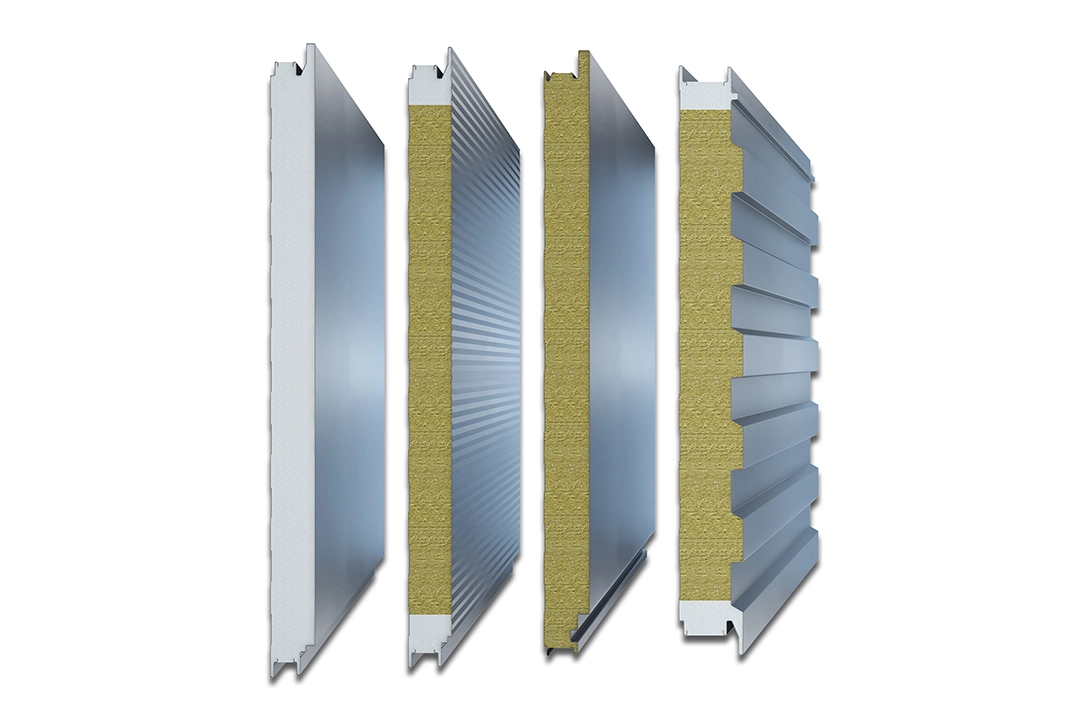
The choice of panel core significantly impacts sandwich panel system performance in building, but several other key factors also play an important role in sandwich panels systems.
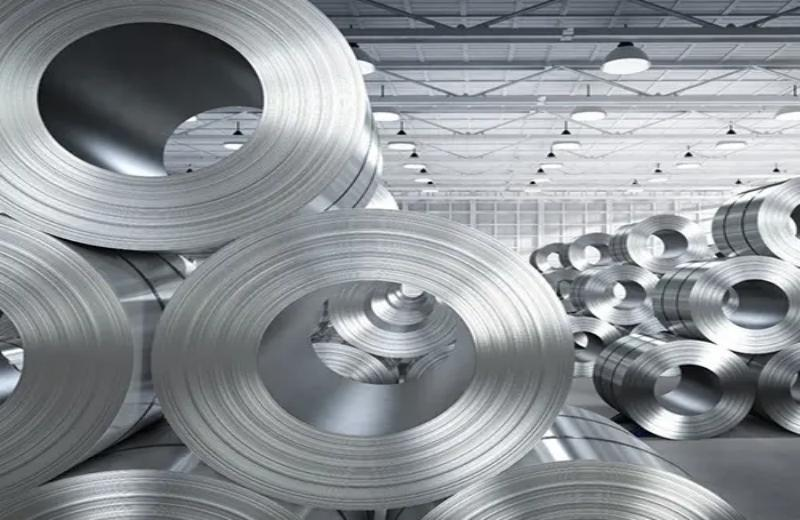
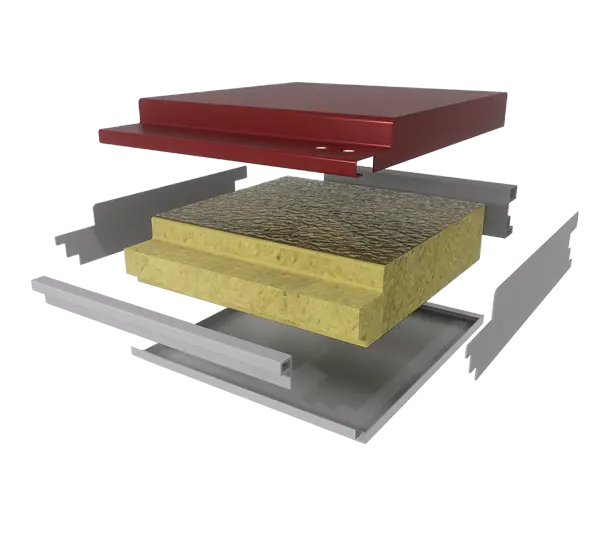
Panel Material: Common sandwich panel materials include galvanized steel, stainless steel, and aluminum. Galvanized steel offers strong corrosion resistance and durability, stainless steel suits high-hygiene applications such as cleanroom sandwich panels, and aluminum is lightweight for specialized prefabricated sandwich panel systems.
Coating Selection: Options such as polyester (PE), PVDF, and PU coatings affect weather resistance, corrosion protection, and aesthetics across different sandwich panel applications.
Thickness Parameters: Panel and core thickness directly influence load-bearing capacity, thermal insulation, and soundproofing performance, especially in soundproofing sandwich panels and EPS sandwich panel systems.
Additionally, installation methods impact construction efficiency and sealing performance in sandwich panel factory production standards. The most suitable solution can be customized based on project requirements, whether for polyurethane sandwich panels, EPS sandwich panels, or other sandwich panels for sale in global projects.
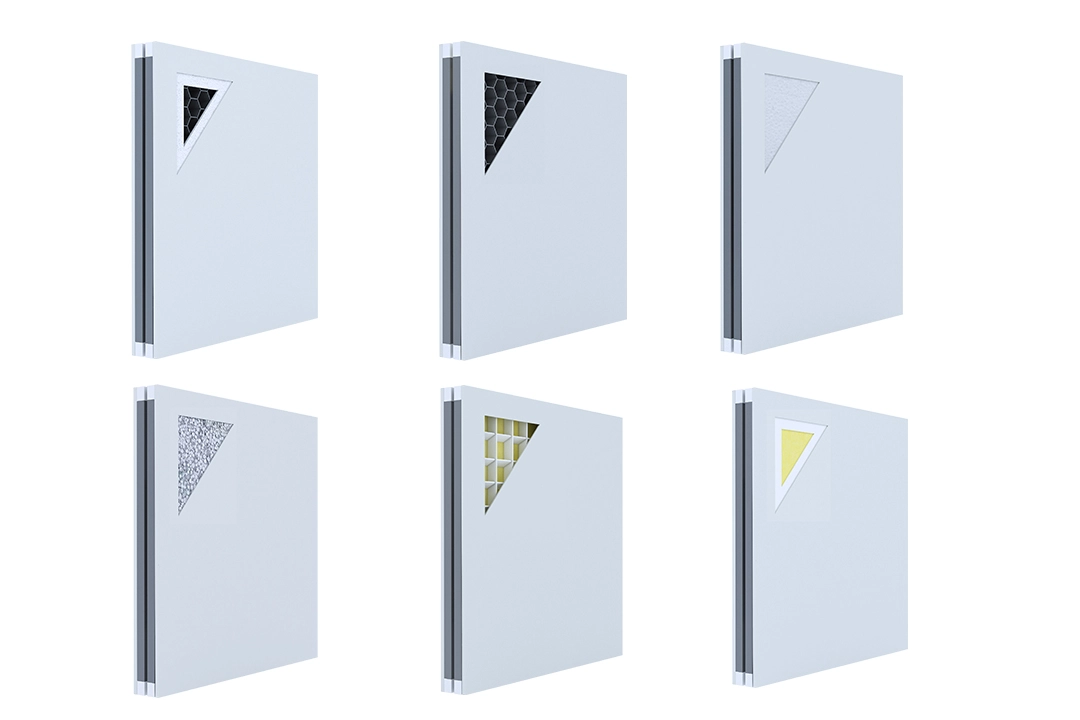
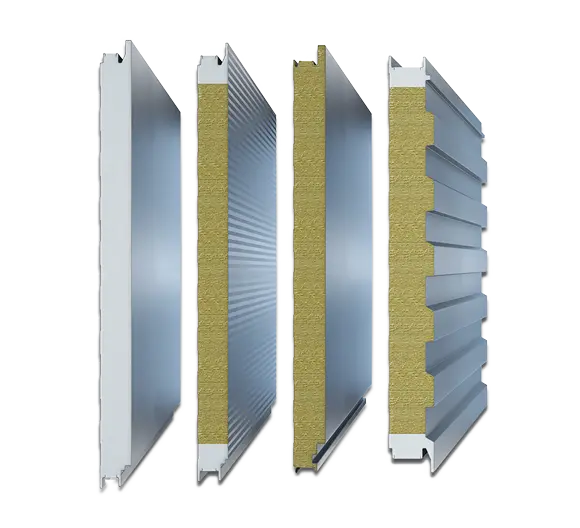
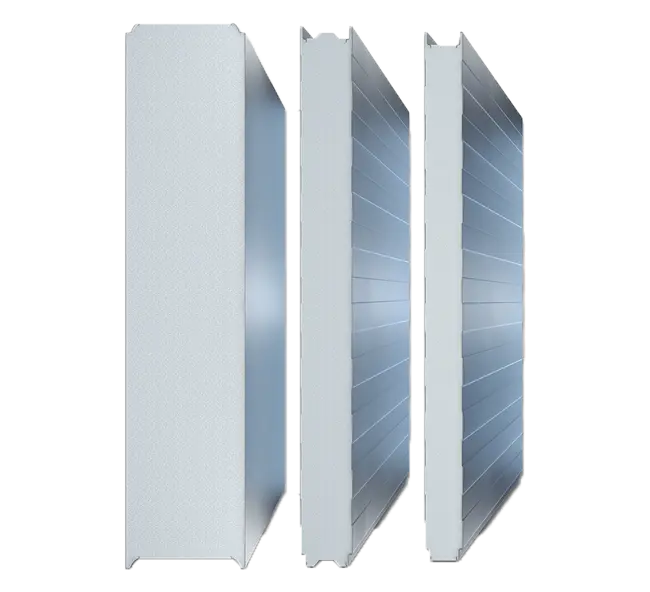
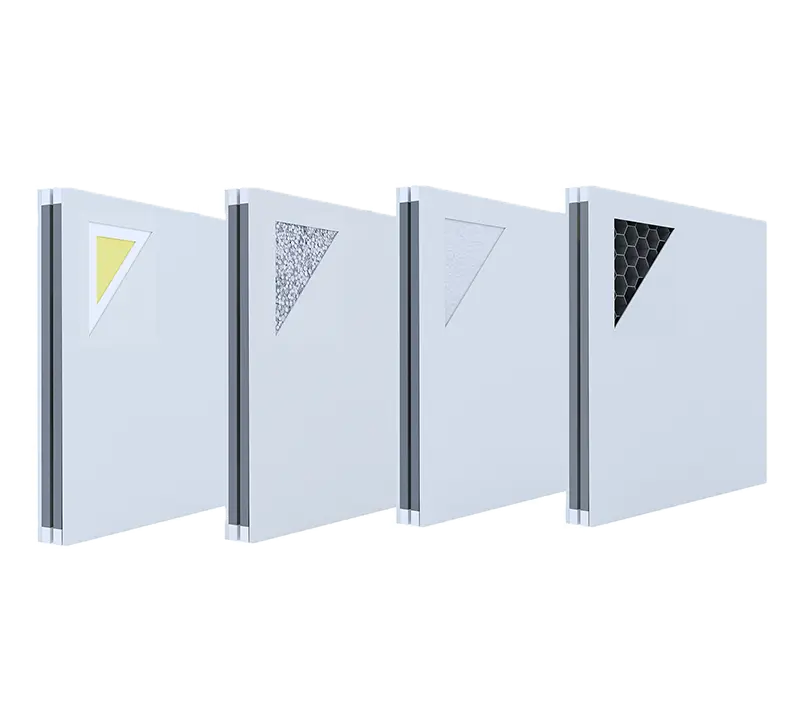
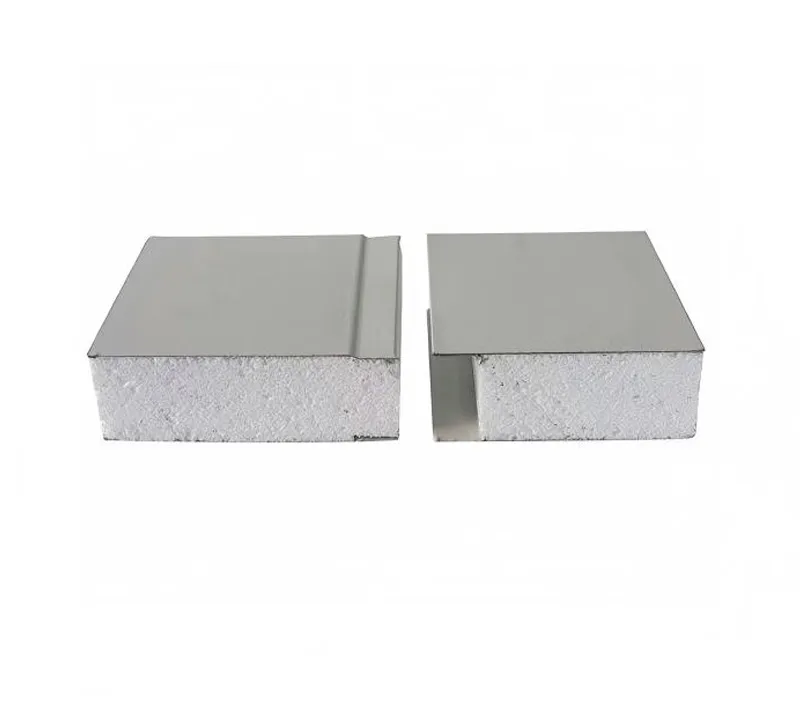
The choice of sandwich panel material core significantly impacts insulation, fire resistance, and structural performance in sandwich panel systems. Our sandwich panels for sale typically use polyurethane foam, rock wool, or glass wool cores.
Foam Core: Polyurethane sandwich panels (PUR) provide high thermal insulation. While polyisocyanurate (PIR) improves fire resistance and thermal stability, making it widely used in prefabricated sandwich panel systems.
Rock Wool Core: Offers excellent fire resistance and acoustic insulation, ideal for soundproofing sandwich panels, though heavier with lower thermal insulation than PIR.
Glass Wool Core: Lightweight with good fire and acoustic performance, suitable for cleanroom sandwich panels, but with lower structural strength and moisture sensitivity.
The selection of core material depends on the specific sandwich panel system application. Thickness and configuration can be fully customized to meet project requirements in sandwich panel B2B supply chains, ensuring the most suitable solution for every project.
This page features the most frequently asked questions and detailed answers. You can find comprehensive information here or submit your inquiries. If you need assistance with ordering panels or have technical questions, feel free to contact us.
The cost of sandwich panels for sale depends on insulation type, panel thickness, and total square footage required. Pricing varies across different sandwich panel systems, including polyurethane sandwich panels, EPS sandwich panels, and rock wool panels. For an accurate quote from trusted sandwich panel manufacturers, please share your project specifications.
Our sandwich panel materials use high-quality galvanized or galvalume steel sheets combined with insulating cores such as PU, PIR, rock wool, or glass wool. These materials are widely used in cleanroom sandwich panels and soundproofing sandwich panels, for global sandwich panel B2B projects.
Standard sandwich panel dimensions range from 400mm–1200mm in width and 40mm–200mm in thickness, with fully customizable lengths. As a sandwich panel factory in China, we provide flexible solutions for sandwich panel systems based on project requirements.
With proper installation and use, sandwich panels can last up to 50 years. All products from our sandwich panel company are designed for long-term durability and performance.
Standard production time is 5–10 working days, with express production possible in as little as 3 days. For non-standard colors or steel thickness, lead time may extend up to 20 days. This ensures flexible supply for sandwich panel projects and large-scale B2B procurement.
Welcome to contact us for anything you want to know.