English
  Español
  العربية
  русский
  ไทย
ไทย 
×
Galvanized steel coils and aluminum-zinc steel coils are both widely used coated steel products designed to improve corrosion resistance, durability, and service life. The main difference is in their coating composition: galvanized steel coils use a zinc coating that provides excellent sacrificial protection, while aluminum-zinc steel coils use an aluminum-zinc alloy coating that offers stronger corrosion resistance, better heat resistance, and longer performance in demanding environments.
Choosing between these two types of Steel Coils depends on factors such as application requirements, environmental conditions, expected service life, processing needs, and cost considerations.
Galvanized steel coils are carbon steel substrates coated with a layer of zinc through a hot-dip galvanizing process. The zinc coating protects the steel base material by acting as a protective barrier and providing sacrificial corrosion protection. Even if the surface is scratched, zinc can continue protecting the exposed steel area.
Aluminum-zinc steel coils, also known as Galvalume steel coils, are coated with an alloy typically consisting of aluminum, zinc, and a small amount of silicon. The aluminum component creates a stable protective layer that improves corrosion resistance, while zinc provides sacrificial protection to maintain long-term durability.
Both products belong to the category of coated Steel Coils and are commonly used in roofing systems, wall panels, industrial buildings, appliances, automotive components, and manufacturing applications.
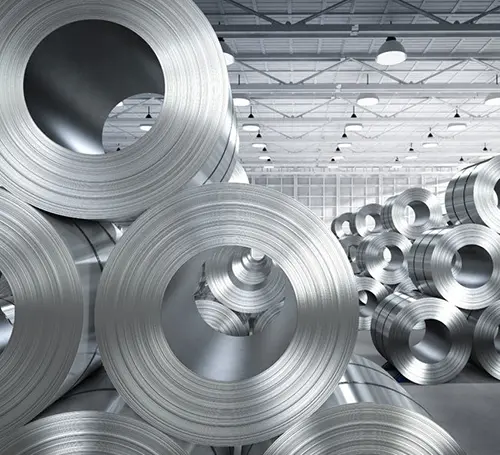
The primary differences between galvanized and aluminum-zinc steel coils include coating structure, corrosion resistance, temperature performance, appearance, and application suitability.
Comparison Factor | Galvanized Steel Coils | Aluminum-Zinc Steel Coils |
Coating Composition | Pure zinc coating | Aluminum-zinc alloy coating |
Corrosion Protection | Excellent sacrificial protection | Superior barrier protection and corrosion resistance |
Heat Resistance | Moderate | Higher resistance to high temperatures |
Surface Appearance | Traditional metallic zinc finish | Smooth, bright, spangled surface |
Service Life | Long-lasting under normal conditions | Usually longer in harsh environments |
Cost | More economical | Higher initial cost but better durability |
Common Applications | General construction, roofing, fencing | Premium roofing, industrial buildings, high-temperature applications |
For projects requiring cost efficiency and reliable corrosion protection, galvanized steel coils are often a practical choice. For applications exposed to moisture, heat, or aggressive environments, aluminum-zinc steel coils generally provide better long-term value.
Aluminum-zinc steel coils generally provide better corrosion resistance than galvanized steel coils, especially in environments exposed to humidity, heat, and atmospheric pollutants.
The aluminum content in aluminum-zinc coatings forms a dense oxide layer that slows corrosion and protects the underlying steel substrate. This makes aluminum-zinc steel coils highly suitable for:
Coastal buildings exposed to salt air
Industrial facilities with demanding environments
Long-life roofing systems
Areas with strong temperature fluctuations
Galvanized steel coils remain highly effective because zinc provides excellent sacrificial protection. When the coating is damaged, zinc corrodes preferentially to protect the steel underneath, making galvanized products widely used for general construction applications.
The best choice depends on the specific operating environment rather than corrosion resistance alone.
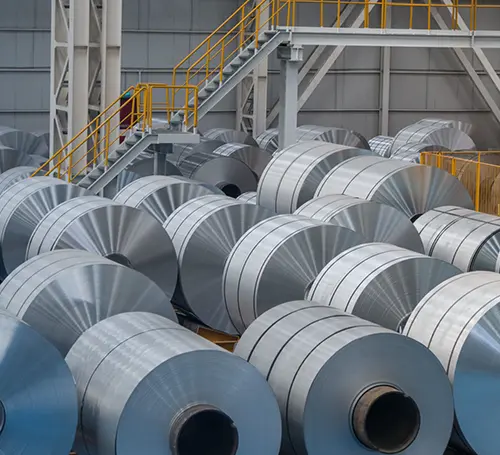
For roofing applications, aluminum-zinc steel coils are often preferred because of their longer service life, better heat reflection, and improved resistance to atmospheric corrosion.
Roofing systems are continuously exposed to sunlight, rain, temperature changes, and moisture. Aluminum-zinc coatings perform particularly well under these conditions because they maintain coating stability at elevated temperatures and provide stronger protection against oxidation.
However, galvanized steel coils are still widely used for roofing where:
Initial budget is a key consideration
Environmental exposure is moderate
Standard durability requirements are sufficient
Many residential and commercial roofing manufacturers select aluminum-zinc coated steel because the extended lifespan can reduce maintenance and replacement costs over time.
Both products begin with cold-rolled steel sheets that undergo surface preparation before coating.
The typical production process includes:
1. Cleaning and removing surface impurities
2. Annealing the steel substrate
3. Passing the steel through molten zinc
4. Controlling coating thickness
5. Cooling and finishing the coil surface
The hot-dip galvanizing process ensures strong adhesion between the zinc layer and the steel substrate.
The production process is similar but uses an aluminum-zinc alloy bath instead of pure zinc. The controlled alloy coating combines the advantages of aluminum’s corrosion resistance and zinc’s sacrificial protection.
Advanced manufacturing technology allows suppliers to provide customized Steel Coils with different thicknesses, coating weights, surface finishes, and mechanical properties according to project requirements.
Both coated steel products serve a wide range of industries, but their applications differ depending on performance requirements.
Galvanized steel coils are commonly used for:
Construction roofing and wall cladding
HVAC equipment
Electrical cabinets
Automotive components
Agricultural buildings
Steel structures
Their affordability and reliable corrosion protection make them one of the most widely used coated steel materials.
Aluminum-zinc steel coils are frequently selected for:
High-end roofing systems
Industrial buildings
Solar panel mounting structures
Heat-resistant applications
Long-life exterior panels
Energy-efficient building systems
For projects where durability and reduced maintenance are priorities, aluminum-zinc coatings provide significant advantages.
Selecting the right coated steel coil requires evaluating several technical factors:
Consider whether the product will be exposed to:
High humidity
Salt spray
Industrial pollution
Extreme temperatures
More challenging environments usually favor aluminum-zinc steel coils.
Projects requiring decades of durability may benefit from aluminum-zinc coatings, while standard applications may achieve excellent performance with galvanized steel coils.
Galvanized steel coils generally offer a lower purchase cost, making them suitable for large-scale projects with controlled budgets.
Both materials can be processed through cutting, bending, roll forming, and fabrication. Buyers should confirm coating compatibility with their manufacturing processes.
Working with an experienced Steel Coils supplier helps ensure the correct material selection based on application conditions and performance expectations.
Galvanized steel coils and aluminum-zinc steel coils both provide excellent protection and durability, but they are designed for different performance requirements. Galvanized steel coils offer economical corrosion protection and versatile applications, while aluminum-zinc steel coils deliver enhanced durability, heat resistance, and longer service life in demanding environments.
For construction, roofing, and industrial projects, selecting the right Steel Coils requires careful consideration of climate conditions, performance expectations, processing requirements, and lifecycle costs. Partnering with a professional steel coil supplier ensures consistent quality, customized solutions, and reliable long-term performance.