English
  Español
  العربية
  русский
  ไทย
ไทย 
×
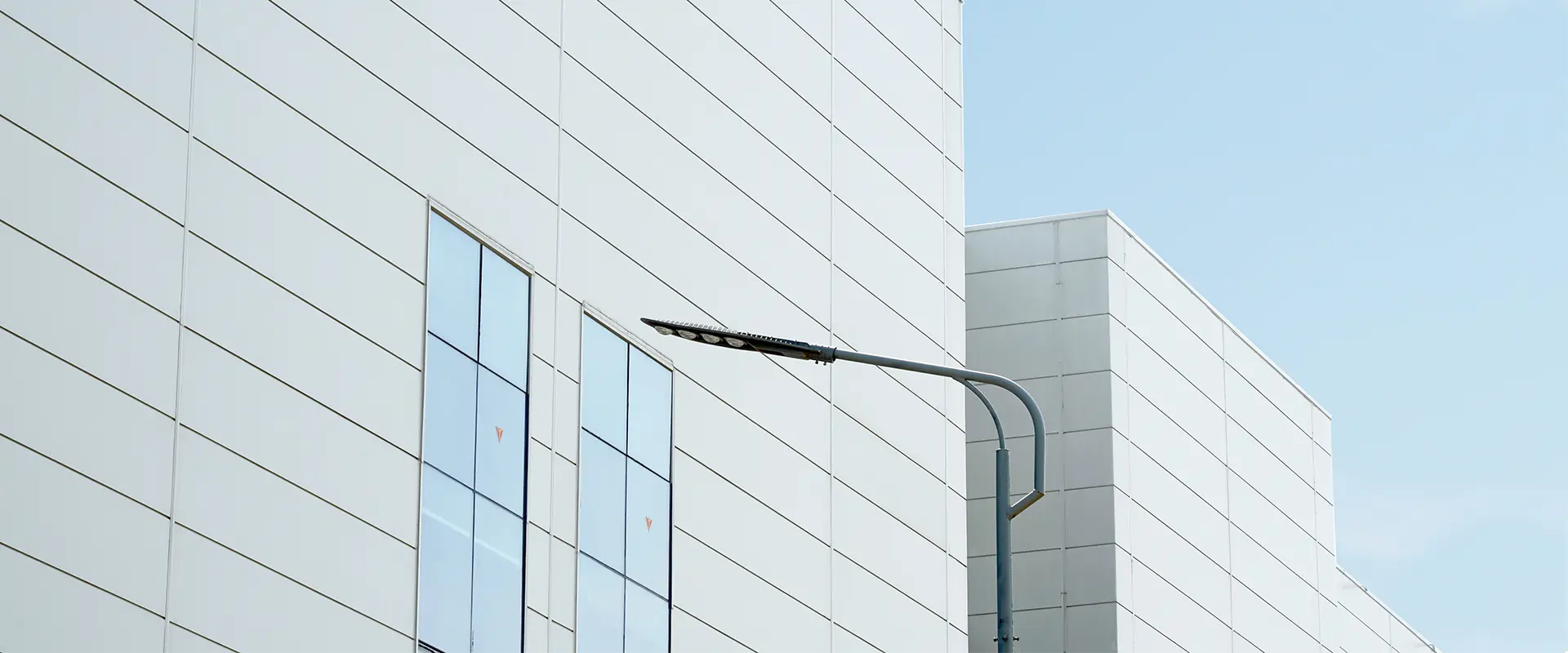
Not just a façade—it’s an energy asset. Turning walls into power stations, it brings new energy value and ESG impact to modern buildings.
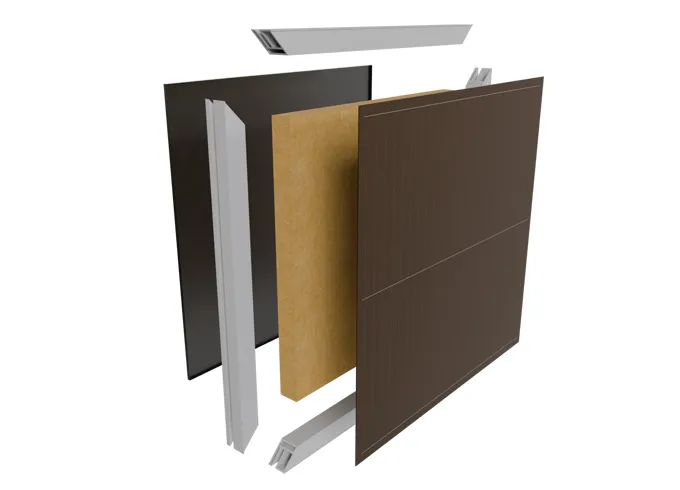
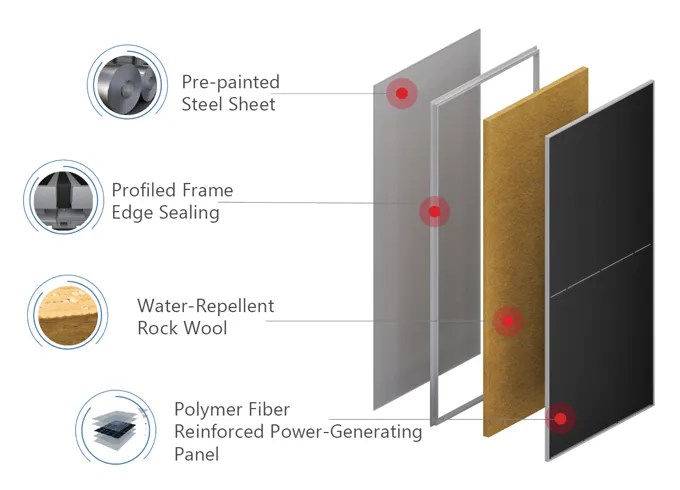
1. Highly Integrated Functions
Thermal Insulation: Cuts energy use and improves comfort.
Solar Power: Generates clean electricity, lowering costs.
Aesthetic Design: Supports diverse façade layouts with multiple colors.
Low Carbon: BIPV integration reduces emissions by 30%+.
2. Lightweight Advantage
Ultra-Light: Far lighter than glass PV, easing structural load.
Cost-Efficient: 15.7 kg/m² (50mm), reducing transport and installation costs.
Safer Construction: Less weight, lower risk at height.
3. Economic Benefits
Long-Term Value: Continuous returns over the building’s lifecycle.
Green Certification: Boosts ESG ratings and project value.
Risk Resilience
4. Energy Security: Provides backup power for key facilities.
| Building Performance Parameters | |||||
| Parameter | Unit | 50 mm | 75 mm | 100 mm | 150 mm |
| Product Size | mm | 2325 × 1164 | |||
| Panel Thickness | mm | 50 | 75 | 100 | 150 |
| Weight | kg/m² | 15.7 | 20 | 24 | 32 |
| Thermal Transmittance (U-value) | W/m²·K | 0.84 | 0.58 | 0.45 | 0.31 |
| Thermal Resistance | m²·K/W | 1.2 | 1.71 | 2.24 | 3.27 |
| Sound Reduction Index (Rw) | dB | 24 | 24.5 | 25 | 26 |
| Pre-Power Generation Panel Material | — | High-strength polymer composite fiber (Light steel power generation panel) | |||
| Core Material | — | High-quality water-repellent rock wool, density 120 kg/m³, moisture absorption ≥ 98.0%, thermal conductivity ≤ 0.048 | |||
| Back Panel | — | 0.5 mm steel plate, coated AZ100, yield strength G250-350, PE coating, coating thickness ≥ 20 μm | |||
| Fire Rating | — | A | A | A | A |
| Service Life | years | 25 | 25 | 25 | 25 |
| Power Generation Performance Parameters | |||||
| Color | Black | Blue | Gold | Silver | Copper |
| Product Power (W) | 540 | 490 | 440 | 475 | 445 |
| Optimal Operating Voltage VmopV_mopVmop (V) | 43.27 | 45.57 | 45.28 | 45.55 | 45.22 |
| Optimal Operating Current ImopI_mopImop (A) | 12.48 | 10.75 | 9.72 | 10.43 | 9.84 |
| Open-Circuit Voltage VocV_ocVoc (V) | 50.3 | 52.83 | 52.53 | 52.81 | 52.54 |
| Short-Circuit Current IscI_scIsc (A) | 13.04 | 11.31 | 10.22 | 10.97 | 10.37 |
| Standard Test Conditions: Irradiance 1000 W/m², cell temperature 25°C, air mass AM1.5 | |||||
| Super Strong & Durable: High load-bearing capacity, 2–3 times stronger than tempered glass. Resistant to wind, snow, rain, hail. Made of new polymer composite material, unbreakable, and low risk of hidden cracks. | |||||

Lower Window-to-Wall Ratio: Avoids excessive heat transfer from high-conductivity glass, improving energy efficiency.
Reduced Light Pollution: Prevents glare, visual disturbance, and related safety risks caused by glass reflections.
No Transparency vs. Efficiency Conflict: Unlike glass, which loses transparency when combined with PV modules and still conducts heat, this cassette panel system balances performance without compromise.
Enhanced Safety: Eliminates risks of glass breakage or spontaneous explosion that can cause falling shards, exposed cells, electric shock, or fire.
Eco-Friendly & Wildlife Protection: Glass-free design reduces reflective hazards to birds and minimizes environmental impact.
Welcome to contact us for anything you want to know.