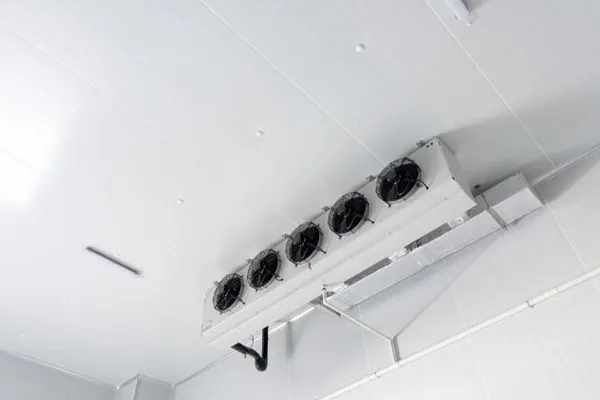
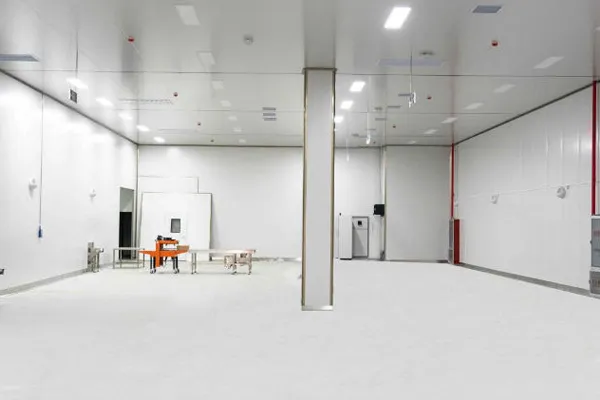
A sandwich panel building envelope combines insulation, external protection and structural elements into a relatively compact system. But successful design requires more than simply selecting a panel thickness.
1. Thermal Performance
The first question is usually: How much insulation does the building require?
For reference, published PUR/PIR sandwich panel data shows thermal conductivity values around 0.022 W/(m·K). Example U-values decrease from about 0.44 W/m²K at 50 mm to 0.22 W/m²K at 100 mm in one published product range.
However, engineers should calculate the complete wall or roof system rather than evaluating the core material alone.
2. Structural Loads
Panel thickness and core type affect span capability and load-bearing performance.
The design should consider:
Wind pressure and suction
Snow load
Panel span
Support spacing
Fastener capacity
Deflection limits
Openings and penetrations
EN 14509 covers factory-made, self-supporting double-skin metal-faced insulating sandwich panels used for roofs, external walls, internal walls and ceilings.
3. Fire Requirements
The insulation core should be selected according to the building's fire strategy.
PIR sandwich panels can be considered where improved fire performance is required compared with conventional combustible insulation systems, while rock wool sandwich panels are commonly selected for projects requiring non-combustible mineral-wool insulation.
The actual classification must come from the tested panel system rather than from the core material alone.
4. Joint and Air-Tightness Design
Joints are one of the most important parts of the envelope.
They influence:
Water tightness
Air leakage
Thermal bridging
Vapor control
Installation quality
EN 14509 recognizes that water permeability of the complete assembly is related to joints and fixings.
Therefore, engineers should review joint details together with the panel specification.
5. Panel Orientation
For wall systems, vertical and horizontal installation can produce different façade appearances and joint arrangements.
Panel orientation should also be coordinated with structural supports, openings, corners, doors and window frames.
6. Maintenance and Replacement
A good envelope design should also consider future maintenance.
Standardized panel widths, accessible fasteners and clear flashing details can make future repair work easier.
Conclusion
For an insulated sandwich panel building envelope, engineers should evaluate the system as a whole:
 English
  Español
  العربية
  русский
  ไทย
ไทย