English
  Español
  العربية
  русский
  ไทย
ไทย 
×
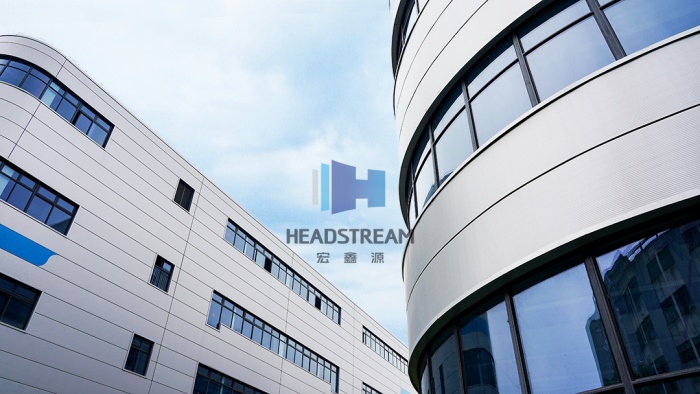
A building facade is far more than a protective barrier against the elements. It is a company’s visual identity, part of the urban landscape, and a form of silent architectural expression.
When facade design moves beyond conventional horizontal and vertical lines, building envelope systems open up a world of possibilities. Different panel profiles, textures, colors, and installation methods can be combined to create distinctive architectural identities.
Through a selection of real-world projects, HEADSTREAM explores five dimensions of facade design and shows how architectural exteriors can be designed with greater freedom and creativity.
Architectural rhythm is often found in the details.
Flat, F4, G6, V8… Different panel profiles create variations in lines, depth, and texture, giving buildings distinctive visual identities.
Clean and minimalist, with crisp lines that complement contemporary architectural designs.
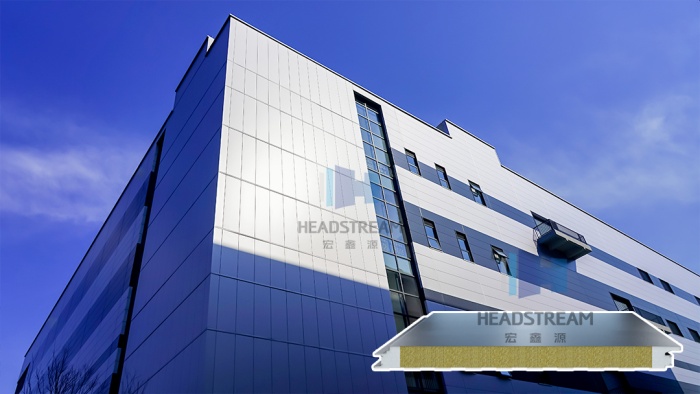
Rich in visual layers without being overly bold, creating subtle relief effects as light and shadow move across the facade.
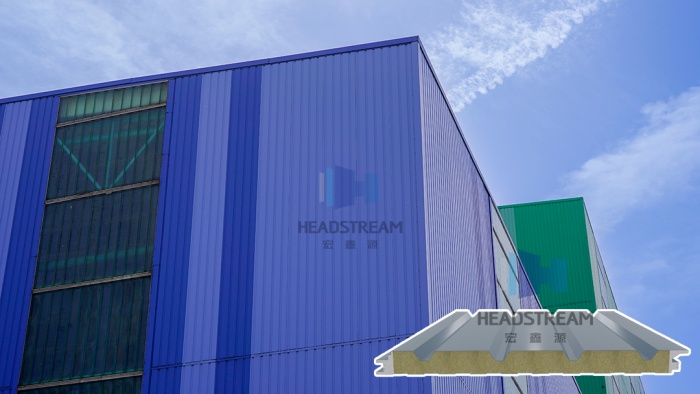
Defined by a stronger sense of order. From a distance, the facade appears clean and unified; up close, its structured contours add visual depth.
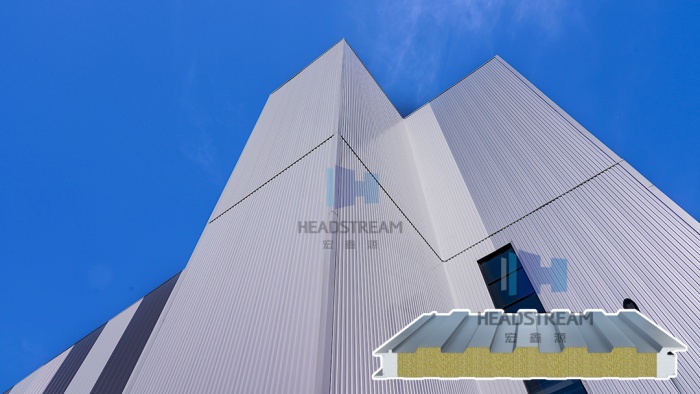
With a more pronounced three-dimensional effect, the strong linear profile adds vertical character and visual strength to large facade surfaces.
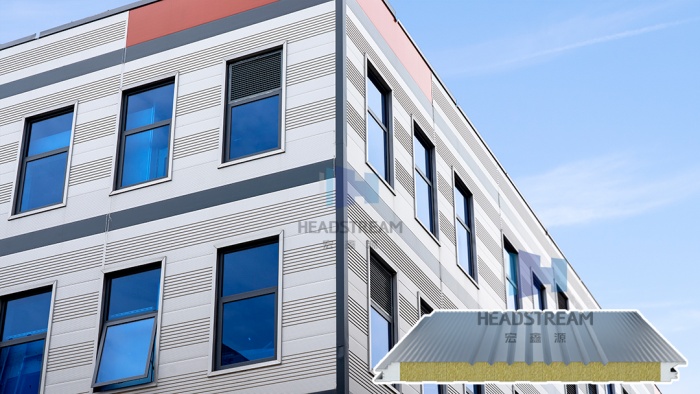
The character of a building material does not have to come solely from natural materials.
Through advanced coating and embossing technologies, metal-faced sandwich panels can achieve a wide range of surface finishes, combining the durability of metal with diverse architectural aesthetics.
Designed to replicate the natural appearance of stone while offering the flexibility of metal, these panels can accommodate a variety of customized shapes and facade designs.
From stone-inspired textures to refined surface finishes, diverse treatments allow metal facades to move beyond a purely industrial appearance and take on a more natural, sophisticated, or contemporary character.
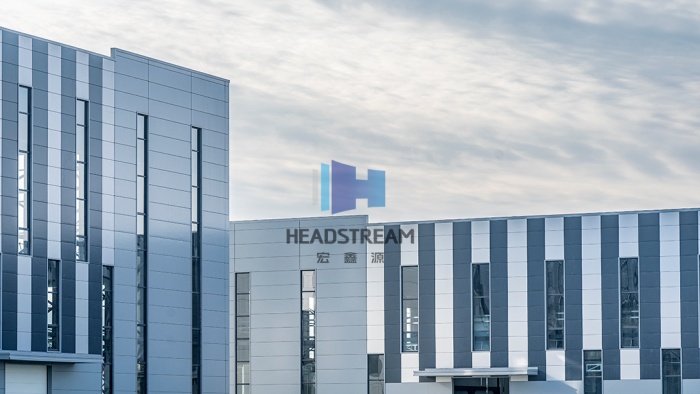
The same material can create an entirely different architectural impression simply by changing its installation direction.
Horizontal installation emphasizes the building’s horizontal lines, creating a sense of openness, stability, and visual continuity.
Vertical installation highlights the building’s height, giving the facade a more slender, dynamic, and refined appearance.
Beyond horizontal and vertical layouts, diagonal installation, staggered joints, and mixed configurations can further break away from conventional patterns. By changing the direction and relationship of panel lines, designers can create richer and more expressive facade compositions.
If form defines a building’s silhouette, color defines its first impression.
Red can create a bold and energetic statement. Green brings a sense of nature and vitality. Gray conveys stability and restraint, while blue creates a modern and rational atmosphere.
When the facade becomes a building’s “color palette,” color is no longer simply decoration—it becomes an important part of corporate identity and architectural expression.
From minimalist monochrome designs to bold color combinations, a wide range of options allows buildings to develop a distinctive and recognizable visual identity.
Architectural corners do not always have to be 90 degrees.
Curved and customized facade elements can introduce smooth, flowing lines into an otherwise rigid structure, allowing architectural forms to move beyond conventional geometric boundaries.
HEADSTREAM’s curved corner panels are precision-processed to achieve smooth curves and accurate transitions. While meeting aesthetic requirements, they are designed to maintain structural strength and thermal insulation performance.
From straight lines to curves, from flat surfaces to three-dimensional forms, building facades can now offer far more room for imagination.
Color expresses personality. Texture creates character. Profiles define language. Installation creates attitude. Customized shapes create breakthroughs.
These five dimensions can be used independently or combined freely, allowing the same building envelope material to create completely different architectural expressions.
Every building can have its own distinctive facade language.
Looking ahead, HEADSTREAM will continue to drive product innovation through technology, developing richer surface finishes, more refined panel profiles, and more flexible installation solutions.
By offering architects and developers greater freedom of choice, HEADSTREAM aims to make building envelope systems not only functional components, but also an integral part of architectural creativity and visual expression.
No limits to facade design. More possibilities for architecture.