English
  Español
  العربية
  русский
  ไทย
ไทย 
×
For steel structure buildings, purlins play an important role in supporting roof and wall systems. Among the most common options, c purlin steel and steel z purlins are widely used in industrial workshops, warehouses, commercial buildings, agricultural structures, and prefabricated projects.
Both C and Z purlins are designed to improve structural support, but they are not always used in the same way. The right choice depends on building span, load conditions, connection design, installation method, and project budget.
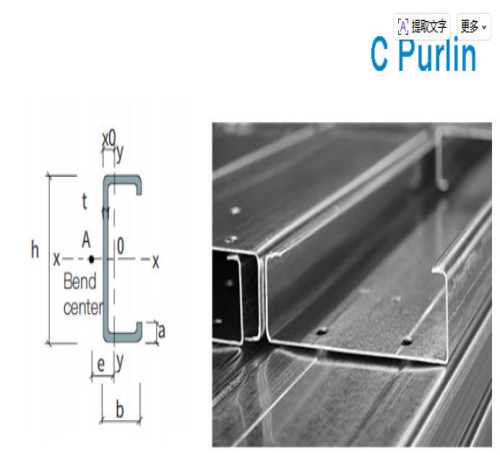
C purlin steel refers to a C-shaped steel section used as a secondary structural member in steel buildings. It is commonly installed as roof purlins, wall girts, and framing support components.
The main advantage of C purlins is their simple shape and easy installation. They are convenient to connect with other steel members and are suitable for many standard steel building layouts. For projects with simple-span structures or moderate load requirements, C purlins can provide practical and efficient support.
Metal c purlins are often used in workshops, warehouses, garages, agricultural buildings, and prefabricated steel structures. They are especially useful when the design requires straightforward connection and stable support.
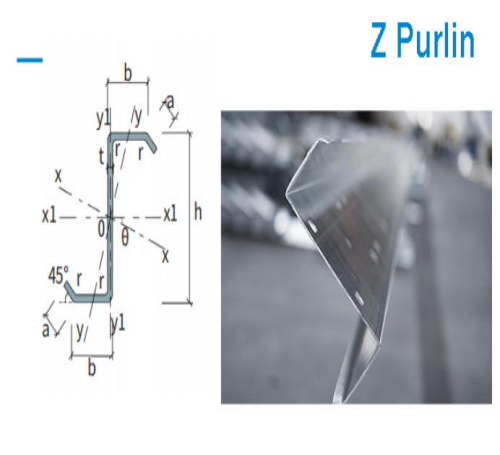
Steel z purlins are Z-shaped steel sections used mainly in roof systems and wall structures. Their shape allows overlapping at supports, making them suitable for continuous-span designs.
Compared with C purlins, metal z purlins are often selected for larger buildings or roof systems where continuous load transfer is required. The overlap connection can help improve structural efficiency and reduce the need for heavier sections in some project designs.
Z purlins are commonly used in industrial plants, logistics warehouses, large-span roofing systems, commercial steel buildings, and other structures where roof support performance is important.
The difference between C and Z purlins is mainly found in their profile shape, connection method, and application scenario.
Item | C Purlins | Z Purlins |
Profile Shape | C-shaped section | Z-shaped section |
Common Use | Roof purlins, wall girts, simple-span support | Continuous roof systems and larger steel buildings |
Connection Method | Simple end connection | Overlap connection at supports |
Installation Advantage | Easy to handle and install | Suitable for continuous-span efficiency |
Typical Projects | Workshops, warehouses, small and medium steel buildings | Industrial buildings, logistics centers, large-span roofs |
Both profiles can be effective when used correctly. The key is not to choose one type blindly, but to match the purlin section with the structural design.
When choosing between metal c purlins and metal z purlins, buyers should first review the project drawings and engineering requirements. The main factors include span length, roof slope, cladding system, wind load, snow load, wall support requirements, and connection design.
C purlins are often a practical choice for simple structures where easy installation and standard connection are important. Z purlins are more suitable for continuous roof systems where overlapping connections and load distribution are required.
Buyers should also confirm steel grade, thickness, galvanized coating, punching layout, and required length. For project-based purchasing, these details directly affect installation accuracy and structural performance.
HEADSTREAM provides high-strength C and Z steel purlins for structural support in roof and wall systems. The company specializes in building material systems, including steel structures, cladding systems, sandwich panels, and related components.
HEADSTREAM C and Z purlins are manufactured from galvanized steel strips and support customized section size, thickness, length, and punching requirements. With roll forming and CNC punching capabilities, the products are designed for dimensional accuracy, corrosion resistance, and stable installation performance.
Buyers looking for c purlins for sale or z purlins for sale can review the HEADSTREAM C & Z Steel Purlins page to understand available product options and structural support applications.
There is no single answer to whether C purlins or Z purlins are better. C purlin steel is often suitable for simple-span support, wall girts, and standard steel building structures. Steel z purlins are commonly used in continuous-span roof systems and larger buildings where overlap connection can improve structural efficiency.
For the best result, buyers should choose purlins based on drawings, load requirements, installation method, and building function. If you need support selecting c and z purlin solutions for your project, contact HEADSTREAM for project-based recommendations and quotation support.