English
  Español
  العربية
  русский
  ไทย
ไทย 
×
Steel structures are increasingly replacing traditional construction methods because they offer faster installation, higher design flexibility, better durability, and improved cost control throughout the building lifecycle. Compared with conventional concrete and masonry systems, a modern Steel Structure provides superior strength-to-weight performance, shorter project timelines, and greater adaptability for industrial, commercial, and large-scale building applications.
For builders, developers, and contractors, the decision is no longer only about initial construction costs. Factors such as construction efficiency, long-term maintenance, environmental impact, and future expansion requirements have made steel solutions a preferred choice for many modern projects. As an experienced Steel Structure manufacturer, HEADSTREAM focuses on delivering customized steel building solutions designed to meet diverse project requirements worldwide.
The main difference between a Steel Structure and traditional construction lies in the primary load-bearing materials and construction processes.
Traditional construction typically relies on reinforced concrete, brick, and masonry materials. These methods have been widely used for decades but often involve longer construction periods, heavier structures, and more complex on-site labor requirements.
A Steel Structure uses high-strength steel components, including steel columns, beams, frames, and connections, to form the main structural system. These components are usually prefabricated in controlled factory environments and assembled quickly at the construction site.
Comparison Factor | Steel Structure | Traditional Construction |
Main Material | High-strength steel | Concrete, brick, masonry |
Construction Speed | Faster installation with prefabricated components | Longer construction cycles |
Structural Weight | Lightweight with high strength | Heavier structural load |
Design Flexibility | Easy customization and expansion | More limitations |
Quality Control | Factory-controlled production | More affected by site conditions |
Future Modification | Easier to modify or expand | More difficult |
This difference makes steel structures particularly suitable for factories, warehouses, industrial buildings, commercial facilities, and large-span structures.
Builders increasingly choose Steel Structure solutions because they provide practical advantages throughout design, construction, and operation stages.
One of the biggest advantages of steel construction is speed.
Unlike traditional methods that require extensive concrete pouring, curing, and on-site processing, steel components can be manufactured in advance and transported for rapid assembly. This significantly reduces construction time and minimizes delays caused by weather conditions or labor shortages.
For commercial and industrial projects, faster completion means:
Earlier facility operation
Reduced financing pressure
Faster return on investment
Better project scheduling control
Companies like HEADSTREAM integrate advanced manufacturing processes to ensure steel components achieve consistent quality before arriving at the construction site.
Yes, steel structures can provide excellent strength and structural performance while maintaining a lighter overall weight.
Steel has a high strength-to-weight ratio, allowing buildings to achieve large spans and complex designs without requiring oversized structural components. This advantage is especially important for warehouses, manufacturing plants, logistics centers, and other buildings that require large open spaces.
Compared with traditional concrete structures, steel buildings offer:
Higher load-bearing efficiency
Better flexibility under dynamic loads
Improved earthquake resistance when properly engineered
Greater adaptability for large-span designs
A professionally designed Steel Structure system combines engineering precision with material efficiency, providing reliable performance for demanding applications.
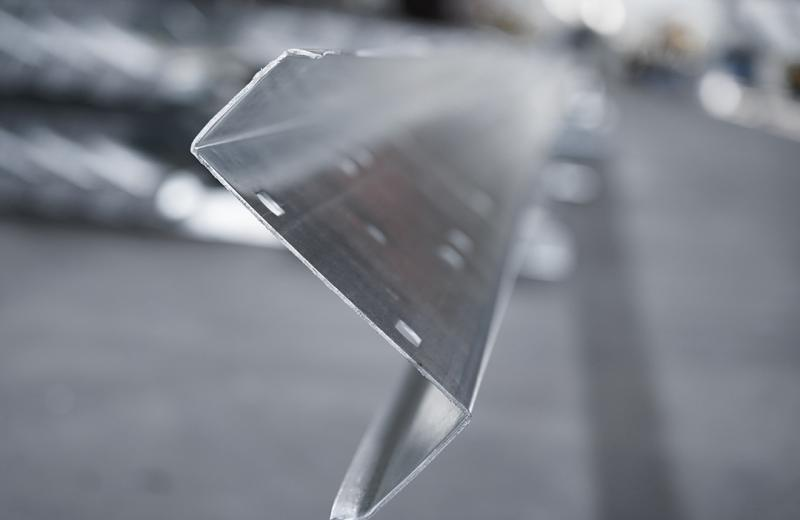
Efficiency in steel construction comes from the combination of prefabrication, precision manufacturing, and simplified installation.
Steel components are produced under controlled factory conditions, where manufacturers can maintain strict standards for:
Material quality
Welding accuracy
Dimensional consistency
Surface treatment
Structural inspection
This reduces errors commonly associated with traditional on-site construction.
Because steel components are manufactured according to project drawings, installation teams can quickly assemble the structure using professional connection methods.
This approach reduces dependence on complex on-site processes and improves overall construction productivity.
For international projects, prefabricated steel solutions also simplify logistics planning and installation management.
Modern Steel Structure systems are widely used across multiple industries due to their strength, flexibility, and scalability.
Common applications include:
Steel structures are ideal for:
Manufacturing plants
Production workshops
Equipment facilities
Industrial warehouses
They provide large column-free spaces required for machinery operation and production efficiency.
Steel solutions are also widely applied in:
Shopping centers
Office buildings
Exhibition halls
Sports facilities
Their flexible design allows architects to create functional and modern spaces.
Warehouses and logistics centers benefit from steel structures because they require:
Large interior areas
Fast construction
Easy expansion
Long service life
Although the initial material cost of steel may vary depending on market conditions, steel structures often provide better overall economic value when considering the entire project lifecycle.
Cost advantages include:
Faster installation reduces labor requirements and shortens project schedules.
Because steel structures are lighter than many traditional systems, they may require less foundation work depending on engineering conditions.
Steel buildings are easier to repair, upgrade, or expand compared with traditional structures.
For developers seeking long-term value, a well-designed Steel Structure solution can provide significant lifecycle benefits.
Selecting the right manufacturer is critical to ensuring project quality and performance.
A professional steel structure supplier should provide:
The manufacturer should have experienced engineers capable of designing customized solutions based on:
Building size
Local climate conditions
Load requirements
Application needs
Reliable production facilities should include:
Precision cutting equipment
Welding inspection systems
Surface treatment processes
Quality control procedures
A strong supplier should support customers from initial design to manufacturing, delivery, and installation guidance.
With years of experience in steel construction solutions, HEADSTREAM provides customized Steel Structure products designed for different industrial and commercial applications, helping customers achieve efficient, reliable, and cost-effective building projects.
The shift from traditional construction methods to Steel Structure solutions reflects the changing needs of modern builders. Faster installation, high strength, design flexibility, and long-term cost efficiency make steel an ideal choice for industrial, commercial, and infrastructure projects.
As construction requirements become more complex, professional manufacturers like HEADSTREAM continue to provide customized steel building solutions that help customers improve project efficiency, reduce risks, and achieve durable building performance. For companies planning new construction projects, steel structures represent not only a modern alternative but also a smarter investment for the future.