English
  Español
  العربية
  русский
  ไทย
ไทย 
×
Search
The Southeast Asian construction market is changing quickly.
Data centers are expanding in Malaysia.
Advanced manufacturing is developing in Thailand.
Electronics and industrial projects are increasing across Vietnam and Indonesia.
Food processing and cold-chain infrastructure are also growing across the region.
For Chinese building material manufacturers, this creates a new opportunity—but also a higher standard for international supply.
Exporting a container of sandwich panels is relatively straightforward.
Supporting a large overseas construction project is much more demanding.
An international sandwich panel manufacturer needs to offer more than one panel type.
Different projects require different core materials and performance characteristics.
HEADSTREAM's product portfolio includes:
PU/PIR sandwich panels
Rock wool sandwich panels
Glass wool panels
EPS panels
Cleanroom panels
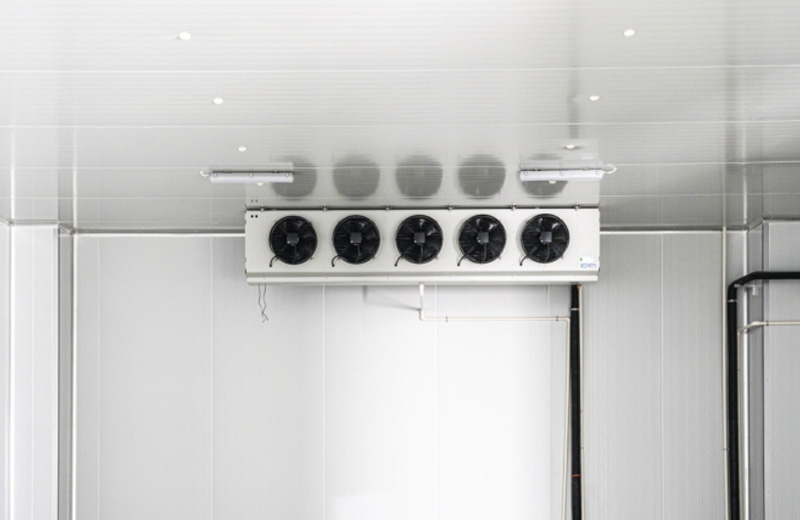
Cold room panels
Exterior wall panels
Roof sandwich panels
This allows the product to be selected according to the actual building application.
Malaysia's data center market demonstrates how quickly building requirements are becoming more sophisticated.
Johor had approximately 602 MW of capacity under construction in the first half of 2026.
For data center buildings, project teams may need to evaluate thermal insulation, fire performance, airtightness, structural requirements and installation details.
The wall panel therefore needs to be considered as part of the entire building envelope.
A modern factory is rarely just one large production hall.
It may include different functional areas with different environmental requirements.
For example:
Area | Potential Panel Solution |
Factory exterior | PU/PIR or rock wool sandwich panel |
Clean production area | Cleanroom panel |
Cold storage | PU cold room panel |
Roof | Insulated roof sandwich panel |
Office/support area | Exterior wall panel |
This is why project-based procurement can be more efficient than purchasing every product from a different supplier.
Large overseas projects can involve thousands or tens of thousands of square meters of panels.
A supplier therefore needs sufficient production capacity and quality control.
HEADSTREAM operates multiple manufacturing bases in China and has an annual composite panel production capacity of approximately 20 million meters.
Production capacity is important, but consistency is equally important.
For international projects, the customer needs to receive panels with consistent:
Thickness
Width
Core density
Steel thickness
Surface coating
Joint dimensions
Consistency helps reduce problems during installation.
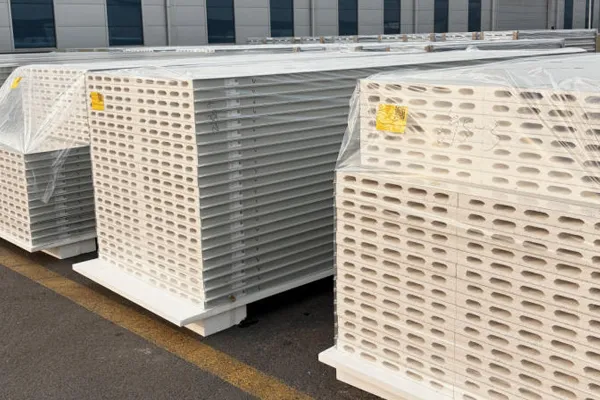
For sandwich panels, transportation is an engineering consideration rather than simply a logistics task.
A panel's volume can be much larger than its actual weight.
Therefore, the number of panels that can fit into a 40HQ container depends on:
Panel thickness
Panel length
Effective width
Packaging method
Stacking arrangement
Before confirming an international order, these parameters should be reviewed together.
For large projects, optimizing the loading plan can have a meaningful impact on the delivered cost per square meter.
The development of Malaysia's data center industry and Thailand's advanced manufacturing sector reflects a wider trend.
Southeast Asia is gradually moving from low-cost manufacturing toward higher-value manufacturing, digital infrastructure and regional logistics.
This creates demand for building materials that can meet more specific technical requirements.
For Chinese sandwich panel manufacturers, the opportunity is therefore not simply to export more products.
It is to become part of the regional construction supply chain.
HEADSTREAM supplies insulated building envelope products for industrial and commercial applications.
Our products include PU/PIR sandwich panels, rock wool panels, cleanroom panels, cold room panels, exterior wall panels and roof panels.
For international projects, we support customers with customized specifications, production planning, export packaging and technical documentation.
As Southeast Asia continues to invest in data centers, intelligent factories, cold-chain infrastructure and industrial buildings, demand for reliable insulated building envelope systems will continue to increase.
For developers, contractors and distributors, choosing a sandwich panel manufacturer should ultimately come down to three questions:
Can the supplier manufacture the required specification?
Can the supplier deliver the required quantity on schedule?
Can the supplier support the project after the order is placed?
Those questions are often more important than the initial price per square meter.